Pages

Monday, 22 July 2019

water cycle

AIM: TO LOOK AT THE WATER CYCLE AND HOW CLIMATE CHANGE IS AFFECTING IT.

Definition: precipitation is bigger flooding storms and hurricanes.

evaporation is water vapour carbon dioxide condensation Oceans freshwater.
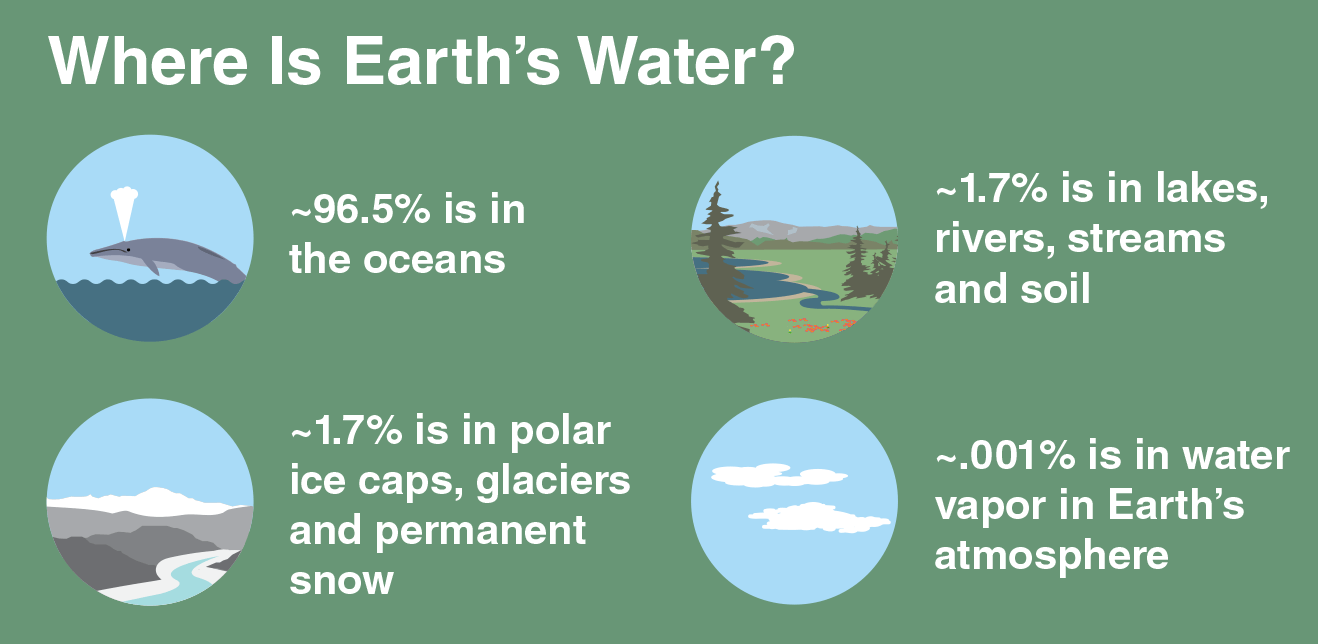


A green box with icons and white text. Text reads: Where is Earth's Water? 96.5 percent is in the oceans; 1.7 percent is in lakes, rivers, streams, and soil; 1.7 percent is in polar ice caps, glaciers, and permanent snow; 0.001 percent is in water vapor in Earth's atmosphere

Scientific words:


  • Evaporation. When water is heated by radiant energy it turns into water vapor.
  • Transpiration. Evaporation from plants.
  • Condensation. When water vapor cools, molecules join together and form clouds.
  • Precipitation. When clouds get heavy the waters falls as rain, sleet, hail, or snow.
  • Acidification: the action or process of making or becoming acidic.

We will be conducting an experiment that looks at the different ways that climate change is affecting the water cycle.
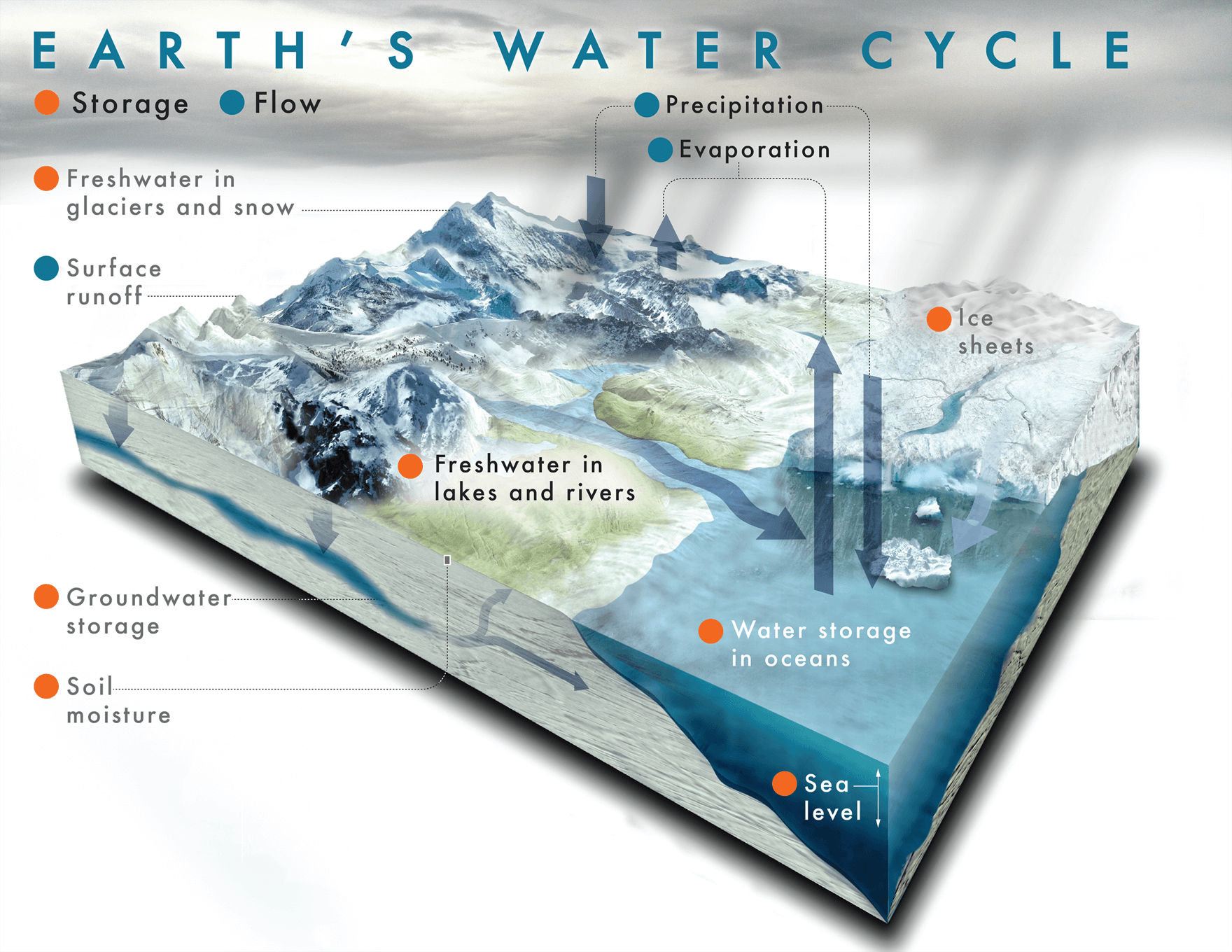
An illustration of the water cycle showing how water travels from rivers and streams to clouds to snow and back again

THE WATER CYCLE EXPERIMENT

Bag 1: Normal Water cycle
Bag 2: Water cycle with CO2 added: like Oceans in climate change
Bag 3: Water cycle with ice added: like Antarctica in climate change

Material:

  1. plastic bag
  2.  water
  3.  blue food coloring
  4. vivit

Steps:

  1.  draw the water cycle on the plastic bag
  2.  put one cup of water into the bag
  3.  put the blue food coloring in to the bag
  4.  shake the bag lightly
  5. hang it on the window when the sun mostly shine
  6. then wait.

Two Images:


Findings:


The Water Cycle: Bag 1
CO2 Water Cycle: Bag 2
Acid
Desert Water Cycle
Bag 3
Does it cycle?
yes!!!yes!!!yes!!!
Amount of Water
222
Acidity
121

Other comments:


Conclusion:


1. The water cycled in bag 1.
2. The water formed small drops in Bag 1
3. The water was normal in bag 1.
4. The water cycled in bag 2.
5. The water formed small drops in Bag 2.
6.. The water had more acidity in bag 2.
7. The water cycled in bag 3.
8. The water formed small drops in Bag 3.
9.. The water was normal in bag 3.


Draw a labelled diagram of the Water Cycle

Water cycle words:
  1. Precipitation
  2. Hurricanes
  3. Storms
  4. Evaporation
  5. Carbon Dioxide
  6. Water
  7. Oceans
  8. Water vapour
  9. Freshwater
  10. Flooding
SOLO Hexagons Activity

Water cycle words:
  1. Precipitation
  2. Hurricanes
  3. Storms
  4. Evaporation
  5. Carbon Dioxide
  6. Water
  7. Oceans
  8. Water vapour
  9. Freshwater
  10. Flooding


TODAY YOU WILL BE INVESTIGATING THE EFFECTS THAT CLIMATE CHANGE HAS ON THE WATER CYCLE.

  1. Using your SOLO hexagons poster write a paragraph about the different aspects of climate change.
  2. Write about the following Climate Change concepts:
You can do these bu powerpoint, embedding a movie , on your blog, on a doc or any other form of presentation. It is up to you.

ACIDIFICATION: HOW DOES CLIMATE CHANGE CONTRIBUTE TO THE ACIDIFICATION OF OUR OCEANS?

Ocean acidification refers to decreasing levels of pH in the ocean, which makes the sea more acidic. It is the long-term change in seawater chemistry due to the absorption of carbon dioxide from the atmosphere. Roughly 30 percent of human-made CO2 is absorbed by the oceans.


Picture: 


Diagram of how it affects the water cycle.


DEFORESTATION: HOW DOES DEFORESTATION AFFECT CLIMATE CHANGE?


Picture:


Diagram of how it affects the water cycle.


ICE CAP MELT: HOW DOES ICE CAP MELT AFFECT CLIMATE CHANGE?


Picture:


Diagram of how it affects the water cycle.


WATER VAPOUR: HOW DOES CLIMATE CHANGE CONTRIBUTE TO WATER VAPOUR AND EVAPORATION?


Picture:


Diagram of how it affects the water cycle.

Friday, 5 July 2019

healthy eating

How does  eating healthy food help all 4 aspects of Hauora? 
 
4 and no more shared paper - report back

 
Taha tinana- Physical well-being
Tama tu tama ora, tama noho tama mate
An active person will remain healthy while a lazy one will become sick

Taha hinengaro- Mental and emotional well-being
“The cheerful mind perseveres, and the strong mind hews its way through a thousand difficulties.” – Swami Vivekananda
Taha whanau- Social well-being
He tangata takahi manuhiri, he marae puehu
A person who mistreats his guest has a dusty Marae
Taha wairua- Spiritual well-being
“Keeping your body healthy is an expression of gratitude to the whole cosmos- the trees, the clouds, everything.” – Thich Nhat Hanh

Thursday, 4 July 2019

Solo taxonomy

Solo taxonomy

1. Prestructural
-no organisation un
-connected ideas

2. Unistructural
-shows connected thoughts.

3. Multi structural
-some connectedness

4. Relational
- make links to other.
- concepts.

5. Abstract.
-bringing your ideas onto other concepts.

Wednesday, 26 June 2019

charlesworth reserve

On wednesday June 26 2019 we have bin doing CIP on CIP we do gardening and we are going to charlesworth reserve to help plant 100,000 tree because trees breath in carbon dioxide (and sunlight) and breath out oxygen.

The charlesworth reserve is named this because there was a person who came to christchurch from england and his name was captain william charlesworth who retired from being a ship captain and became a farmer. Capt Charlesworth brought a lot of land and he was the first man to buy that land. He turned the wetlands into a farm the reserve is named after him because he was the first person to buy this land other than the maoris who owned it before him.

here is some infomation from a website

history
“This 20 ha of land, separated from the estuary by Linwood Ave and Humphries Drive, was drained in the 1920s and used as pasture. Restoration began in 1991, when paddocks were cleared and planted, and tidal pools were re-created.
The reserve is comprised of a tidal basin with surrounding saltmeadow, saltmarsh, coastal shrubland and coastal bush. Its role is to provide nesting, roosting and feeding habitat for native and migratory birds, as well as provide habitat for fish, estuarine marine life, lizards and terrestrial invertebrates.
The space is also a valuable recreational area for the local community. Seats at viewing points overlook the pools which are a hotspot for wetland and wading birds, including the migratory bar-tailed godwit/kuaka.”
Volunteering 

"Over 100,000 trees, shrubs and marsh plants have now been planted at this site and volunteers play a major role in caring for these.  
Charlesworth Reserve is being actively restored by the Avon-Heathcote Ihutai Estuary Trust(external link), with support from Trees for Canterbury(external link), who donate and assist the planting of native vegetation. "
Where was the charlesworth reserve? It is in Christchurch.
Why is it important for me? Because trees eat carbon dioxide and I want to live whole live.
What was the place he was buried when he died? He was buried at woolston.
When/where born/die? He was born 1814 died at 1875.
Why that spot is named after him? Because he owns a lot of land and he was the first man to own that land.
Where was he born? He was born in England.

The name of the ship Captain william charlesworth arrived on the Brothers
We are planting 4 different type of plants here are the 4 plants
  1. Coprosma crassifolia thick-leaved coprosma or Coprosma crassifolia
  2. Coprosma propinqua mingmingi or Coprosma propinqua
  3. Coprosma robusta karamü or Coprosma robusta 
  4. Cordyline australis ti köuka, cabbage tree or Cordyline australis 


Thursday, 20 June 2019


 Image result for coal mining

Image result for oil rig

Aim: To look at how fossil fuels are contributing to climate change and how we can prevent this.

Definition of Fossil Fuels: fossil fuels are solid and liquid


Scientific Terms for Students
  • coal: a dark-brown to black solid substance formed naturally from the compaction and hardening of fossilized plants and used as a fuel primarily for electricity generation
  • natural gas: a mixture of hydrocarbon gases that occurs naturally beneath the earth’s surface and is used as a fuel primarily for cooking and heating homes
  • renewable resource: a resource that is never used up (e.g., solar energy)
  • non-renewable resource: a resource that is not replaceable after its use (e.g., coal, gas)

Examples of Fossil Fuels:
  1.   oil
  2.   coal
  3. natural gas

Activity: 

In groups of 3 you will learn about different fossil fuels and the way they are mined?
Each group will be given a fossil fuel. The recorder will read it to the group. The recorder will write down some of the important points.
Person 1: Recorder: to write down 5 points of interest from the text. 
  1. 5 Points:
  2. Positives and negatives of your type of mining.
Person 2: Reporter: to read back to the class their 5 points of interest.
Person 3: Collector: Gathers the required stationary from the teacher.


Mining Fossil Fuels

What Fossil Fuels are mined?
How are they mined?

1. drilling into the oil pack undo ground and pumps all the oil.
2. 
3. 
4. 

Where are they mined?

1. 
2. 
3. 
4. 
5.

    Activity;

    On the sheet provided you need to make two drawings of your cookie. 
    1. looking down at it. 
    2. side on -  of the imaginary habitat that will live on the top of the cookie. ( trees, buses, flax, sea, etc)

    Material:

    1.  
    2.   
    3.   
    4.  
    Steps:
    1.   
    2.   
    3.   
    4.   
    5.   
    Once you have drawn your cookies you must take 2 pictures and upload them to your blog.

    Findings: What did you find out as a result of your mining?

    Conclusion: 
    Aim: To look at the causes of climate change and how to prevent it.

    As you watch the video answer these questions:

    What is our greatest threat in thousands of years?

    How do we see climate change affecting the globe?
    1. Climate change  
    2. Sea level rising big storms and world heating up bigger floods.
    3. The world will not like the heat.
    4. Stop using fossil fuels
    5. It is a men made disaster because it killing our world.
    6. We are killing our self.
    7. We are killing everything in our world.
    8. A lot of bats died because of us.
    9. We are going to make animals Instinct.
    10. We are making bigger fires
    11. Antarctica melting.
    12. it's 1 degrees hotter


    What is needed to change history?

    Is climate change a man made disaster?

    Dramatic action must be made in the next __ years to change it?

    Why is our climate changing?

    What is causing the warming trend of the climate?

    What is the main problem?

    What are examples of these?

    Burning fossil fuels releases what gas?

    How much hotter now is our world?

    What do we call this global warming?

    How is this affecting creatures / animals like bats?

    What percentage of species are near extinction?

    How could this effect the world ecosystems?

    What global change was seen and recording breaking last year?

    How is climate change affecting our weather systems?
    1. 
    2. 
    3. 

    What is another effect of climate change?

    What will happen if the ice melts in Antarctica and the Arctic?

    How does this affect people?

    What other things affect oceans change?

    What does too much heat do to the coral?

    Why did some industries not want to stop burning fossil fuels?


    Stop at 23.39

    Investigation

    You can decide on how you would like to do this investigation. Your presentation could be on the blog, slides, or Powerpoint.

    Write a definition, upload an image and list where these fossil fuels are mined.

    1. Coal
    2. Oil
    3. Natural Gas


    Write a paragraph of 5 sentence,upload an image and name 2 countries that use this type of renewable energy.


    1. Solar
    2. Wind
    3. Waves
    4. Hydro

    Write a 5 sentence reflection about what you have learnt about Climate Change and how it is going to affect us in the future.